Train
Read the DIAG Curriculum
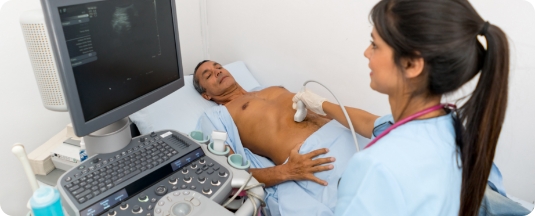
Learn with text and diagrams
This advanced curriculum teaches clinicians POCUS skills for managing biliary, venous, urinary tract and ocular pathologies. It includes protocols for image generation, image identification, and clinical integration. All examination questions are based on the curriculum.
SECTION 1
POCUS
basics
5 modules with diagrams
- Ultrasound controls
- Physics of ultrasound
- Probe movements
- Probe types
- System care
SECTION 2
Advanced skills for certification
5 modules
- Gallbladder
- Deep vein thrombosis (DVT)
- Renal
- Bladder
- Ocular
Sign Up For a Course
The courses listed below are offered by independent organizations.
Are you looking for a CPoCUS accredited course? Accredited courses have been reviewed by CPoCUS to ensure they meet the applicable training, instructor and certification requirements.
Would you like to advertise your course on the CPoCUS website? Submit a new course or update your existing listing using the Course Advertising Form.
Note: Courses are offered independently. CPoCUS does not determine course fees or cancellation policies.

Calgary Internal Medicine POCUS Elective
- Calgary, AB
-
Introductory courses
Certification courses


CanPoCUS
- Introductory courses
EDE Bootcamp
-
Introductory courses
Certification courses
Nickel POCUS
-
Introductory courses
Certification courses
CERTIFY
How to get certified
as an Independent Practitioner (IP)
IP candidate completes a CPoCUS-accredited DIAG introductory course
IP candidate completes logged scan requirements supervised by a DIAG Track Instructor
IP candidate passes three examinations with a DIAG Track Instructor
DIAG Track Instructor submits an IP request for the IP candidate
IP candidate pays one-time certificate fee to finalize IP certification
IP candidate receives IP number and DIAG IP certificate
Brief overview of certification examinations
You must be a CPoCUS member to attempt any examination
All examination questions are based on the curriculum
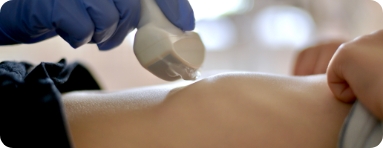
Written examination assesses knowledge base.
The Written exam is conducted on a computer (one examiner supervises many candidates).
Pass score of 85%.
The Written exam is an online, multiple choice, closed book examination with 20-80 questions. If the candidate fails the first attempt, they receive a report detailing incorrect answers. Candidates may re-write the examination the next day.

Visual examination assesses image interpretation and ability to integrate POCUS findings into clinical care.
The Visual exam is conducted on a computer (one examiner supervises one candidate).
Pass score of 85%.
The Visual exam uses an online interactive video presentation. The examiner asks the candidate to interpret images and videos, and incorporate findings into case scenarios.
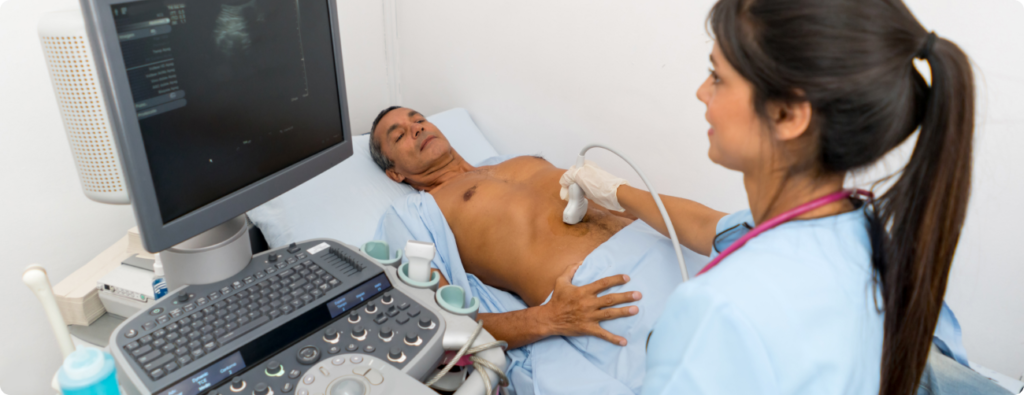
Practical examination assesses image generation.
The Practical exam is conducted on a standardized patient (one examiner supervises one candidate).
Pass score of 100%.
The Practical exam is an in-person scanning examination. The examiner uses a detailed checklist of essential techniques to assess the candidate.
The candidate should perform the techniques without hesitation and without prompting from the examiner.
Maintain
Keep up to date with MOC
Maintenance of Competency (MOC) helps refresh and expand your POCUS skills
Online quizzes available in French and English
Test your POCUS skills in these tracks:
Acute Care CORE
Acute Care MSK
Family Medicine CORE
Resuscitation
Diagnostic
How to complete MOC modules online
Login, select a MOC module in Members sections
Read Curriculum
Take Quiz (score ≥ 85%)
Download Certificate of Completion
Earn CME credits with MOC
Earn up to 30 Mainpro+ credits by reviewing the DIAG curriculum
and passing the DIAG MOC quizzes
Get certified by CPoCUS
Become a Member
Take advantage of the benefits below and more!